
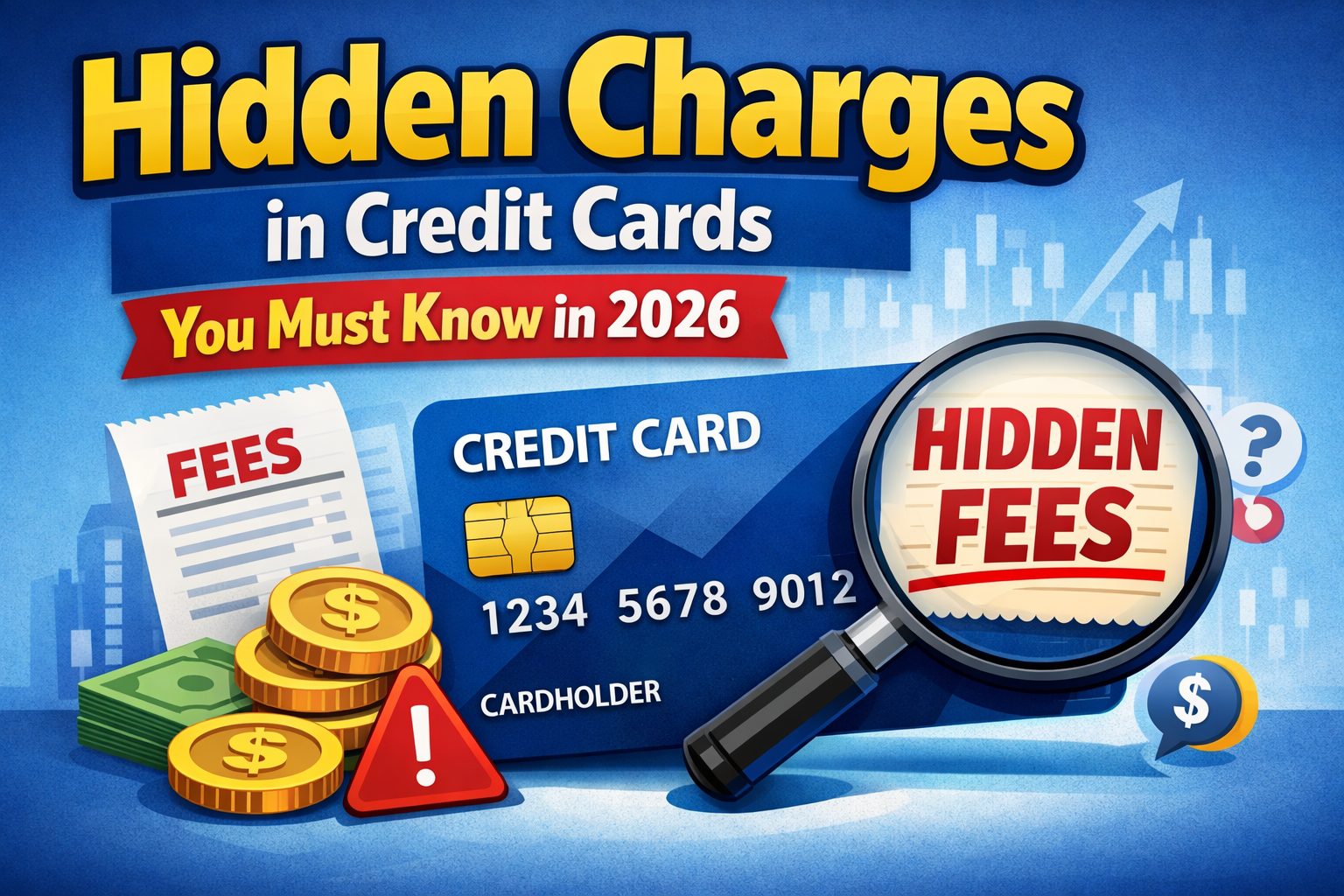
Hi friends, we have all felt that little shock when the credit card statement lands in our inbox or app and suddenly the total is higher than what we actually spent. In 2026, with RBI cracking down harder on transparency, banks are forced to show everything clearly, yet these “hidden” charges still manage to sneak in and quietly drain our hard-earned rupees. Whether you are a salaried professional in Kolkata juggling EMIs and daily expenses, a young family in a Tier-2 town, or someone who just got their first lifetime-free card, these fees can add up to thousands every year if you are not careful. No annual fee cards like Amazon Pay ICICI or IDFC FIRST Millennia sound fantastic, but they still come with plenty of other costs that nobody highlights in the big bold advertisements. Today let us talk straight, like we would over evening chai, about the real hidden charges you must know in 2026 so you can swipe smarter and save more.
The biggest culprit that catches almost everyone off guard is the late payment fee and penal interest. Miss your due date by even one day and banks like SBI, HDFC, or Axis can slap a late fee anywhere between ₹500 to ₹1,300 depending on your outstanding amount, plus penal interest at the full revolving rate of 3% to 4% per month (that’s 36% to 48% yearly). What makes it worse in 2026 is the compounding – if you pay only the minimum due (usually 5% of the bill), the bank starts charging interest on the entire remaining balance from the very next day, and yes, interest on interest kicks in too. RBI rules now demand clearer warnings in statements, but many of us still ignore that bold line saying “paying only minimum due will stretch your repayment for years with heavy interest.” One small delay and suddenly your ₹20,000 bill becomes ₹22,000 or more before you even realise.
Then there is the cash withdrawal or cash advance trap, which remains one of the most expensive hidden charges. Withdraw ₹10,000 from an ATM using your credit card and you immediately pay 2.5% to 3.5% as cash advance fee (minimum ₹250-₹500), plus interest starts accruing from the second you take the money – no 50-day grace period here. In 2026 most banks have kept these rates high because they want to discourage it, yet people still use it for emergencies and end up paying 40%+ effective cost. Add 18% GST on the fee and you are looking at extra ₹400-₹500 gone in minutes. Even lifetime-free cards have this charge; there is simply no escape unless you treat your card strictly for purchases only.
Foreign transaction markup is another silent killer, especially if you shop on international sites or travel. Most regular cards still charge 2% to 3.5% on every dollar or euro spent, plus GST, even when the conversion rate looks fair. In 2026, while zero-forex cards like Scapia or AU Ixigo have become popular for travellers, many everyday cards from ICICI and HDFC continue with the old 3.5% rate on overseas spends. And here is a new twist this year – some banks like ICICI have quietly added 1% extra on wallet loading (Amazon Pay, Paytm, etc. above ₹5,000) and even 2% on online gaming transactions. These are not advertised loudly, but they show up in your statement under “service charges” or “other fees.”
Over-limit charges and GST on everything are the small but frequent drains. Cross your credit limit by even ₹100 and an over-limit fee of ₹500-₹1,300 can hit you, again with GST. Every single fee – late payment, cash advance, forex, EMI processing – attracts 18% GST in 2026, which banks now have to show separately thanks to RBI’s transparency push. Even converting a purchase to EMI comes with a processing fee of 1% to 3% plus GST, and if you pre-close it, some banks add another 2-3% closure charge. Reward redemption sometimes has hidden costs too – points may not be earned on rent, utilities, insurance, or government payments, and redeeming them for vouchers can have lower value than cashback.
Duplicate statement requests, card replacement (₹200-₹300), or SMS alert charges (though many have moved to free app notifications) still pop up for some older cards. And let us not forget dynamic currency conversion (DCC) when you are abroad – merchants offer to charge in rupees instead of local currency and quietly add their own 3-5% markup. Always choose to pay in local currency to avoid this hidden fee.
So how do you stay safe in 2026, friends? First, read your monthly statement like your salary depends on it – RBI now mandates full breakup of interest, fees, and taxes in simple language. Set up autopay for the full outstanding amount, not just minimum due. Choose cards wisely – lifetime-free ones with zero forex if you travel, or low-interest EMI options only when you have calculated the total cost. Check your CIBIL regularly because repeated late payments or over-limits can push your score down and make future loans costlier. Before swiping big, ask the bank app for the exact charges or use comparison sites like BankBazaar or Paisabazaar for the latest fee schedule.
At the end of the day, credit cards are still one of the best tools for middle-class Indians to manage cash flow and earn rewards, but only if you treat them with respect and eyes wide open. In 2026, with RBI forcing more transparency, the “hidden” charges are becoming less hidden, yet they still exist and can quietly eat into your budget if you are not alert. Pay full bills on time, avoid cash withdrawals, skip wallet loads and gaming on cards unless necessary, and these fees will stay away from your wallet.
Have you ever spotted a surprise charge on your statement that left you annoyed? Or are you worried about any specific fee on your HDFC, SBI, or ICICI card right now? Drop your experience or question in the comments – whether you are in West Bengal, Delhi, or a small town – and I will help you figure out how to avoid it. Keep that CIBIL healthy, swipe responsibly, and let your card work for you instead of the bank.
Here’s to fee-free, stress-free credit in 2026. Take care and stay smart with your money!
🔥 Related Posts
Credit Card Billing Cycle Explained Simply – A Must-Read for Every Indian Card User in 2026

Credit Card Trends in 2024: What to Expect in Rewards and Benefits

Best Low Interest Credit Cards in India (2026 Guide)
Credit Card Interest Calculation Formula – Full Breakdown with Examples (India Guide 2026)

Top 10 Credit Cards for 2024: Best Rewards, Cash Back, and Perks