
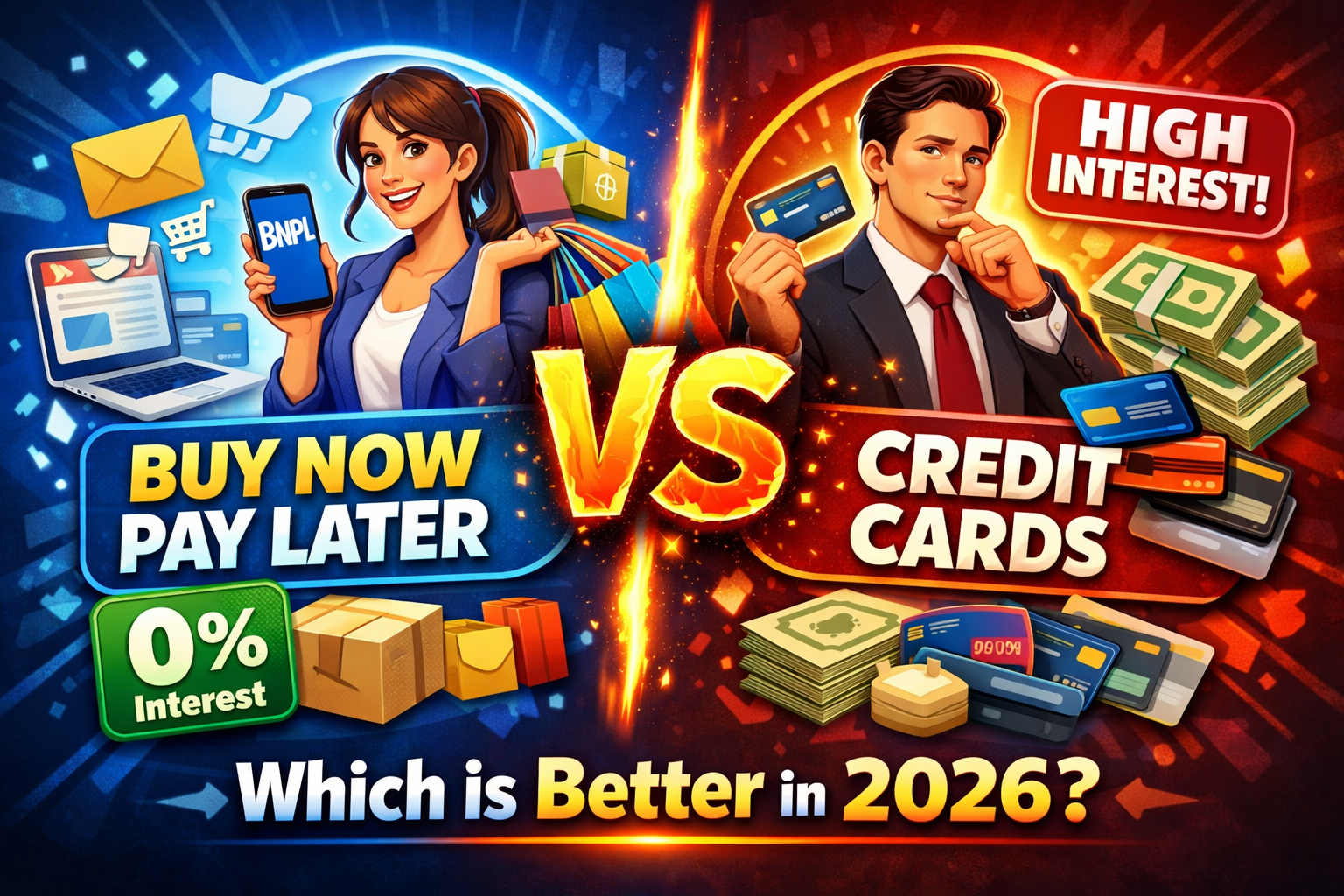
Namaste friends, in today’s fast-paced life where salaries come once a month but desires pop up every day, both Buy Now Pay Later (BNPL) and credit cards have become lifelines for middle-class families, young professionals, and online shoppers across India. Whether you are eyeing a new smartphone on Flipkart, planning a quick gadget upgrade, or managing festival shopping in Kolkata or any small town, the “Pay in easy EMIs” option always tempts us. But which one actually saves you money and keeps your finances healthy in 2026? After RBI’s tighter rules on digital lending, BNPL has become more regulated and closer to formal credit, while credit cards continue to offer wider acceptance and rewards. Let us break it down honestly, like a conversation over evening chai, so you can choose what suits your wallet best this year.
First, let us understand the basic difference. A credit card gives you a revolving credit limit that you can use again and again. You get up to 50-55 days interest-free on purchases if you pay the full bill on time. Miss it, and revolving interest of 36% to 48% per year (3-4% monthly) kicks in hard. BNPL, on the other hand, is more like a short-term loan for a specific purchase. You buy now and split the payment into 3, 4, 6, or sometimes 12 EMIs. Many popular BNPL options like LazyPay, Simpl, Amazon Pay Later, Flipkart Pay Later, or bank-linked ones from HDFC, ICICI, and Axis often promise zero interest if you pay on schedule. In 2026, thanks to RBI guidelines, most standalone fintech BNPLs now partner with banks or NBFCs, follow proper KYC, and report to credit bureaus, so they are no longer completely “easy and unregulated.”
Now, the pros of credit cards are quite strong for everyday use. They are accepted almost everywhere – online, offline, local kirana stores (via UPI-linked cards), and even abroad. You earn cashback, reward points, lounge access, fuel waivers, and other perks that can save you real money every month. Responsible use builds your CIBIL score beautifully over time. You also get strong fraud protection and dispute resolution. In 2026, lifetime-free cards like Amazon Pay ICICI, IDFC FIRST, or Axis Neo still give solid value without annual fees. The big downside? If you carry forward even a small balance, the interest is brutal and compounds quickly. Late fees, over-limit charges, forex markup, and GST on everything can quietly add up.
BNPL shines when you want strict discipline and short-term affordability. It is super easy – often instant approval with minimal checks, especially for smaller amounts under ₹50,000. No annual fee, and many genuine zero-interest plans for 3-6 months make big purchases feel light on the pocket. Fixed EMIs help in better budgeting because you know exactly what to pay every month. In 2026, with RBI’s push, late payments now hit your credit score faster, which is actually good for overall financial discipline. But limitations are real – BNPL works mostly on partnered merchants (though growing fast on ecommerce and some offline stores), no reward points in most cases, and multiple BNPL accounts can make tracking confusing. Miss even one EMI and late fees plus interest (sometimes 24-36% annually) can surprise you.
Let us talk money numbers straight. Suppose you buy a ₹30,000 mobile. On a credit card with full payment, you pay exactly ₹30,000 and maybe earn 1-5% cashback. If you revolve, it can cost you extra ₹800-1,200 per month in interest. On BNPL with zero-interest 4-pay plan, you pay ₹7,500 x 4 = ₹30,000, but any delay adds heavy penalties. Processing fees (though rare now) or GST on interest can still appear. For bigger amounts or longer periods, credit card EMI conversion sometimes works out similar or cheaper if you get a good no-cost offer from banks.
So which one is better in 2026? It depends on you, friends. If you shop across many places, travel, want rewards, and are confident of paying full bills every month – go for a good credit card (especially lifetime free ones). It gives flexibility and builds credit. If you need money for one specific purchase, want fixed EMIs without worrying about revolving interest, and shop mostly on Amazon, Flipkart, or partnered apps – BNPL is simpler and often cheaper for short terms. Many smart users now use both: credit card for daily spends and rewards, BNPL only for planned big buys.
A few practical tips for 2026: Always check your CIBIL before applying (750+ is ideal for better limits). Read the full terms – RBI now mandates clear APR disclosure. Never take more than 2-3 BNPLs at a time to avoid debt confusion. Set autopay and calendar reminders. Treat both as tools, not extra income. Overspending with either can push you into a debt trap, especially with rising living costs.
At the end of the day, neither is universally better – the winner is the one you use responsibly. Credit cards reward discipline with benefits, while BNPL enforces discipline with fixed schedules. In these regulated times, both can work well for middle-class Indians if you keep emotions in check and numbers in front.
Have you used BNPL more than credit cards, or the other way round? Did you face any surprise fees or late charges? Share your real experience in the comments – whether you are in West Bengal, Delhi, Bangalore, or a small town – and I will help you decide what fits your spending style. Use credit wisely, pay on time, and let these tools improve your life instead of stressing it.
Here’s to smarter shopping and stronger finances in 2026. Take care and swipe (or tap) responsibly!
🔥 Related Posts
EMI on Credit Card: Pros, Cons & Hidden Fees in 2026 – A Straight Talk for Every Indian Wallet
Best Low Interest Credit Cards in India (2026 Guide)
Flipkart Axis Bank vs Amazon Pay ICICI Credit Card – Which One is Better in 2026?
Cashback vs Reward Points Credit Cards – Which Should You Choose in 2026?

The Pros and Cons of Secured vs. Unsecured Credit Cards in 2024: A Comprehensive Guide