
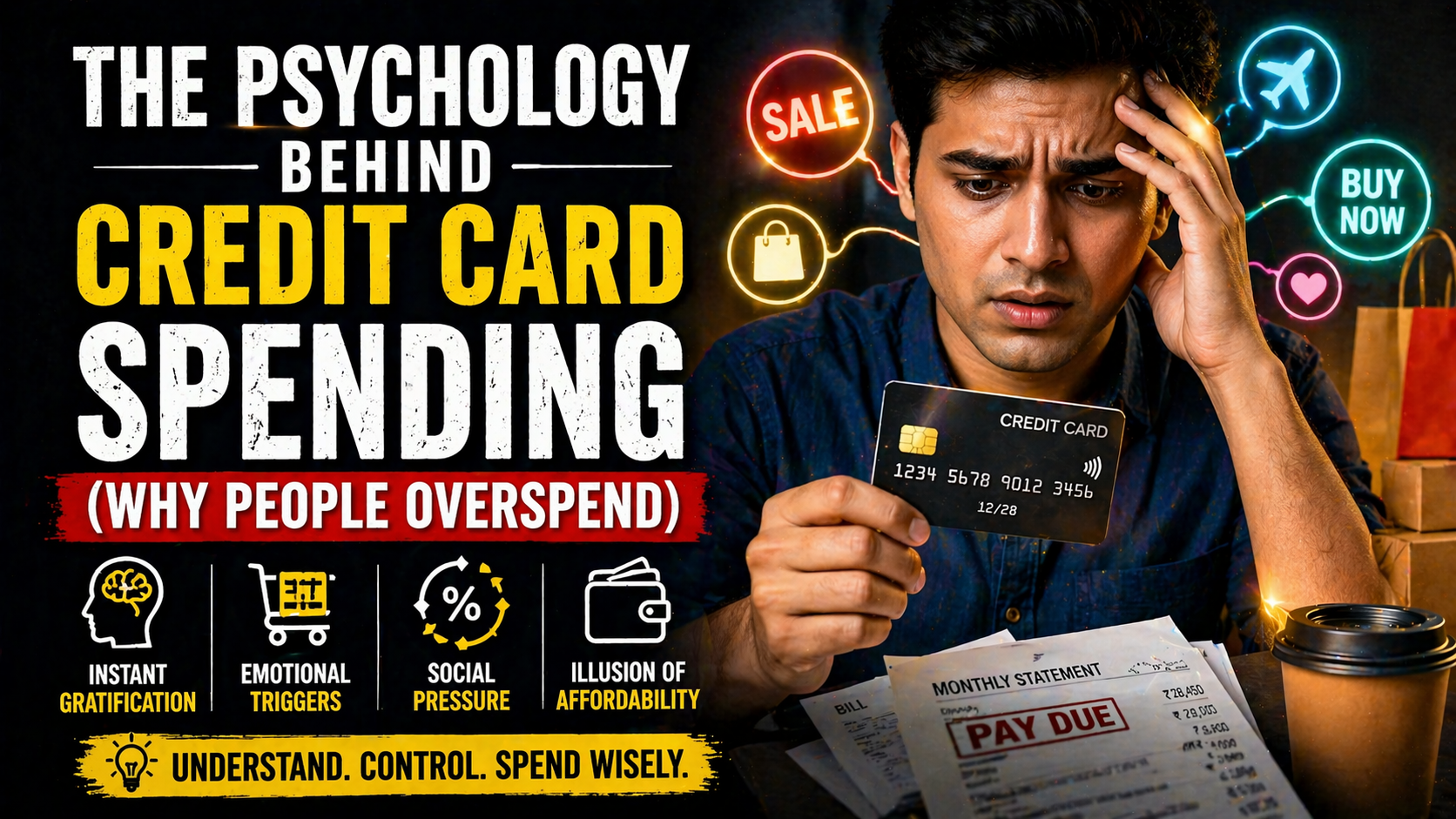
Credit cards are often seen as convenient financial tools, but beneath that convenience lies a powerful psychological effect that influences how we spend money. Many people in India find themselves spending more than they originally planned when using a credit card, even if they are generally careful with cash. This isn’t just about lack of discipline—it’s deeply connected to how the human brain perceives money, pain, and rewards. Understanding this psychology can help you take control of your spending and use credit cards more wisely.
One of the biggest reasons people overspend with credit cards is something psychologists call the “pain of paying.” When you pay with cash, you physically see the money leaving your hand. This creates a real, immediate sense of loss, which naturally makes you think twice before spending. However, when you use a credit card, that feeling is significantly reduced. There is no physical exchange of money, no immediate impact on your wallet, and no strong emotional signal telling you to stop. As a result, spending feels easier and less painful, which often leads to higher purchases.
Another important factor is delayed payment. Credit cards allow you to buy something today and pay for it weeks later. This separation between the act of spending and the act of paying weakens your financial awareness. At the moment of purchase, your brain focuses on the benefit of owning the product rather than the cost of paying for it. By the time the bill arrives, the excitement of the purchase has already faded, but the financial obligation remains. This delay makes it easier to justify spending more than you normally would.
The concept of “available credit” also plays a significant role in overspending. When you see a high credit limit—say ₹1,00,000 or more—it creates a psychological illusion of having more money than you actually do. Even though this is borrowed money, your brain may treat it as part of your available resources. This often leads people to stretch their spending beyond their actual income, especially for lifestyle purchases like gadgets, dining, or travel.
Reward systems further encourage spending behaviour. Many credit cards offer cashback, reward points, or discounts on purchases. While these benefits can be useful, they can also create a subtle push to spend more. People often justify unnecessary purchases by thinking they are “earning rewards” or “saving money.” In reality, spending ₹5,000 just to get ₹100 cashback is still a net expense. The brain tends to focus on the reward rather than the overall cost, which can lead to impulsive decisions.
Social and emotional factors also contribute to credit card overspending. In today’s digital world, people are constantly exposed to advertisements, influencer lifestyles, and peer pressure. Credit cards make it easier to match that lifestyle instantly, without waiting to save money. Whether it’s buying the latest smartphone, booking a vacation, or shopping during festive sales, the desire to keep up can override rational financial thinking. Since the payment is not immediate, the decision feels less risky in the moment.
Another psychological trigger is the “minimum payment trap.” When credit card statements show a minimum amount due, it gives a false sense of security. Paying this small amount makes people feel like they are managing their finances responsibly, even though the majority of the balance remains unpaid and starts attracting high interest. This can create a cycle where users continue spending while carrying forward debt, gradually increasing their financial burden.
Impulse buying is also much more common with credit cards. Online shopping platforms, one-click payments, and saved card details reduce the time between desire and action. The less time you have to think, the more likely you are to make an emotional purchase. Credit cards remove friction from the buying process, making it incredibly easy to act on impulse without fully considering the consequences.
There is also a phenomenon known as “mental accounting.” People tend to treat credit card spending differently from cash spending. For example, someone might hesitate to spend ₹2,000 in cash but feel comfortable putting the same amount on a credit card. This happens because the brain categorises credit spending as “future money” rather than real, immediate money. Over time, this mindset can lead to a disconnect between actual income and spending habits.
Despite these psychological challenges, it is entirely possible to use a credit card responsibly. Awareness is the first step. When you understand why you tend to overspend, you can take practical steps to control it. Setting a personal spending limit below your actual credit limit is a good start. Tracking your expenses regularly, either through mobile apps or SMS alerts, helps you stay aware of how much you’re spending. Avoiding unnecessary reward-driven purchases and focusing only on planned expenses can also make a big difference.
Another effective strategy is to treat your credit card like a debit card. Only spend what you already have in your bank account, and make it a habit to pay your full bill on time. This approach allows you to enjoy the benefits of a credit card without falling into debt. You can also introduce small delays before making non-essential purchases—giving yourself 24 hours to decide often reduces impulse buying.
In conclusion, overspending with credit cards is not just a financial issue—it’s a psychological one. The reduced pain of paying, delayed billing, easy access to credit, and reward systems all combine to influence your behaviour in subtle ways. By understanding these triggers and building disciplined habits, you can take back control. A credit card is not the problem; it’s how we respond to it that makes the difference. When used with awareness and control, it can be a powerful tool rather than a financial burden.
🔥 Related Posts

5 Credit Cards with the Best Cash Back Offers for 2024

The Pros and Cons of Secured vs. Unsecured Credit Cards in 2024: A Comprehensive Guide
How Banks Decide Your Credit Card Limit (Internal Algorithms Explained) – India Guide 2026

How to Choose the Right Credit Card for Your Financial Goals in 2024

Comparing Credit Card Interest Rates: Which One is Right for You in 2024?