
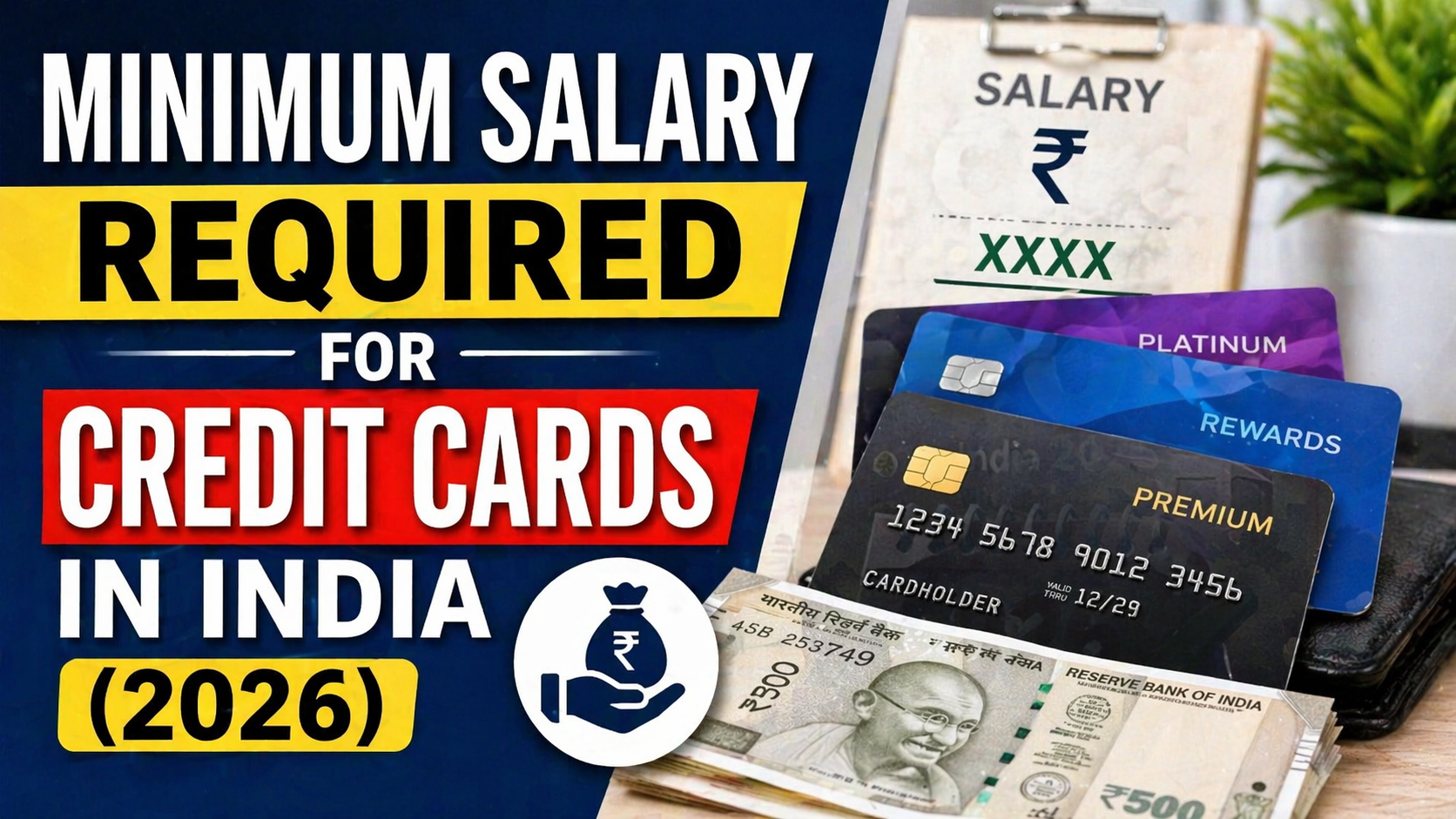
In today’s fast-moving financial world, credit cards are no longer a luxury—they’ve become a practical tool for managing everyday expenses, earning rewards, and building a strong credit profile. However, one of the most common questions people in India ask before applying is simple: how much salary do you actually need to get a credit card? The answer isn’t fixed, because banks don’t follow a single rule for everyone. Instead, they look at your overall financial profile, with salary being just one part of the bigger picture.
Generally speaking, most banks in India expect a minimum monthly salary of around ₹15,000 to ₹25,000 for basic entry-level credit cards. These are the cards designed for beginners—people who are new to credit or just starting their careers. If your salary falls in this range, you still have a decent chance of approval, especially if you work for a stable company and have a clean financial record. As your income increases, your eligibility improves. For mid-range credit cards that offer better cashback and rewards, banks usually look for a monthly income between ₹25,000 and ₹50,000. Premium credit cards, on the other hand, are targeted at high-income individuals, and these typically require salaries starting from ₹50,000 and going upwards of ₹1 lakh per month.
Another important factor that many people overlook is the city they live in. Banks in India often categorize locations into metro cities, tier 2 cities, and smaller towns. If you live in a metro city like Mumbai or Bangalore, the salary expectation may be slightly higher because the cost of living is also higher. In contrast, applicants from smaller towns may qualify with a relatively lower income. This doesn’t mean approval is easier or harder—it simply reflects how banks assess financial stability based on location.
While salary is important, it is not the only deciding factor. Your credit score plays a major role in whether your application gets approved or rejected. A score above 750 is generally considered strong and can significantly boost your chances, even if your salary is on the lower side. On the flip side, if your credit score is low or you don’t have any credit history at all, banks may hesitate to approve your application, regardless of your income. This is why many first-time applicants face rejection—they simply don’t have a credit track record yet.
Your employment type and job stability also matter a lot. Salaried employees working in reputed companies are often preferred because their income is considered more predictable. Self-employed individuals can also get credit cards, but they may need to show higher income proof or additional financial documents. Similarly, if you frequently switch jobs or have gaps in employment, banks may see that as a risk factor.
Now, what if you don’t meet the minimum salary requirement at all? The good news is that you still have options. One of the easiest ways to get started is through a secured credit card, which is issued against a fixed deposit. In this case, your credit limit is linked to the deposit amount, and no income proof is required. This is a great way to build your credit score from scratch. Another option is to get an add-on credit card under a family member’s account, which allows you to use a card without having independent eligibility.
It’s also important to understand why some credit card applications get rejected even when the applicant meets the salary criteria. Common reasons include a low credit score, high existing loan burden, unstable job history, or even simple documentation errors. Banks carefully assess your repayment ability, so if you already have multiple EMIs or debts, your chances may decrease.
To improve your chances of approval, it’s always better to start small and build gradually. Choose an entry-level card that matches your income, maintain a healthy bank balance, and make sure your financial records are clean. Over time, as your income grows and your credit score improves, you can upgrade to better cards with more benefits.
In conclusion, while the minimum salary required for a credit card in India usually starts from around ₹15,000 per month, approval depends on a combination of factors, not just income alone. Think of your salary as the entry ticket, but your credit behavior, stability, and financial discipline are what truly decide whether you get approved. If you approach it wisely and use your card responsibly, a credit card can become one of the most powerful financial tools in your wallet.
🔥 Related Posts

How to Improve Your Credit Score with Credit Card Strategies in 2024

Credit Card Safety Tips for 2024: Protecting Your Digital Wallet

Hidden Charges in Credit Cards You Must Know (India Guide 2026)

Hidden Charges in Credit Cards You Must Know in 2026: The Fees Banks Don’t Shout About
Credit Card Billing Cycle Explained Simply – A Must-Read for Every Indian Card User in 2026